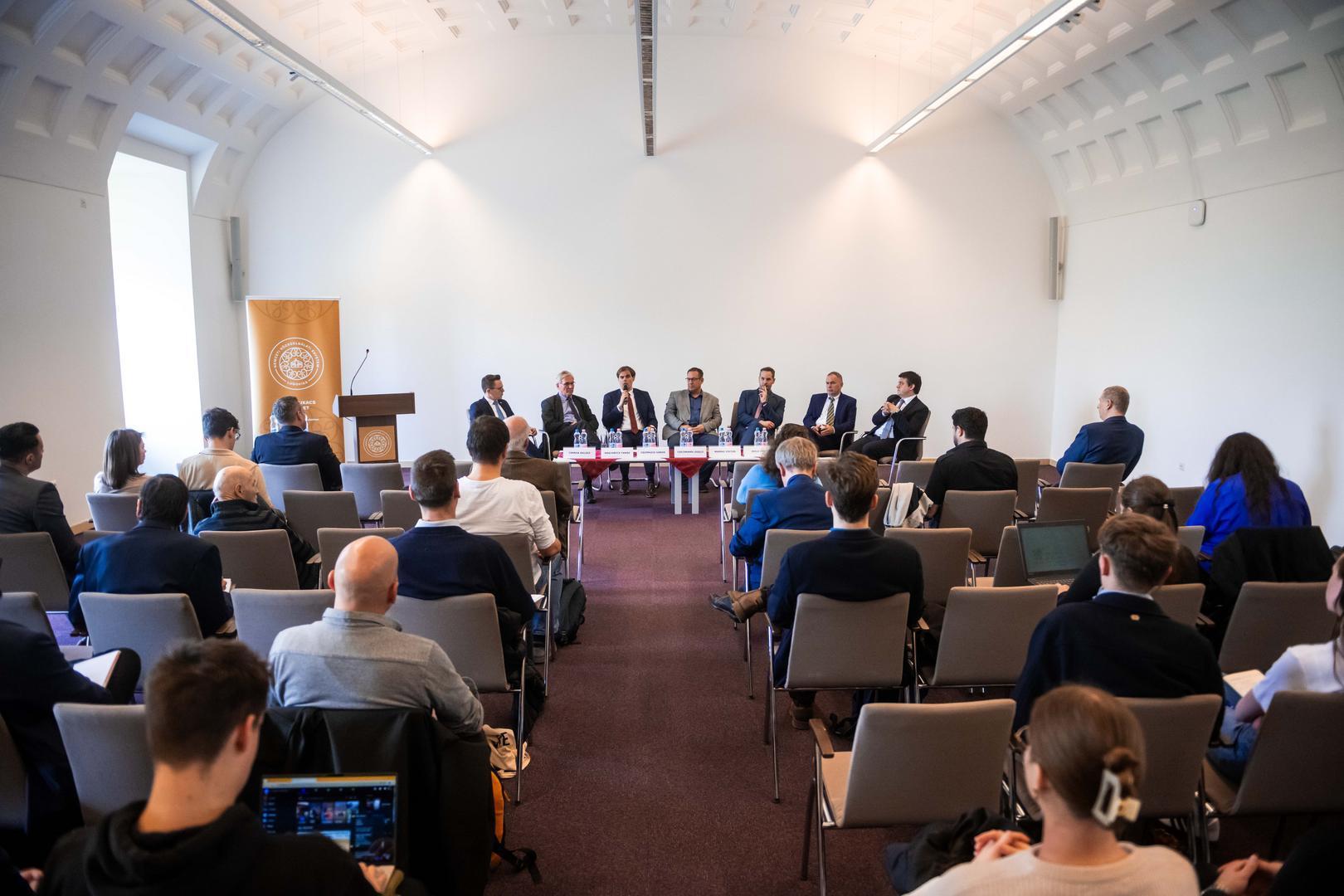


On March 12, the John Lukacs Institute for Strategy and Politics (JLI) of the Eötvös József Research Center (EJKK) at Ludovika University of Public Service (NKE) hosted a scholarly workshop titled The U.S. National Security Strategy in Focus. The event took place in the Zrínyi Miklós Hall of the Ludovika Main Building.
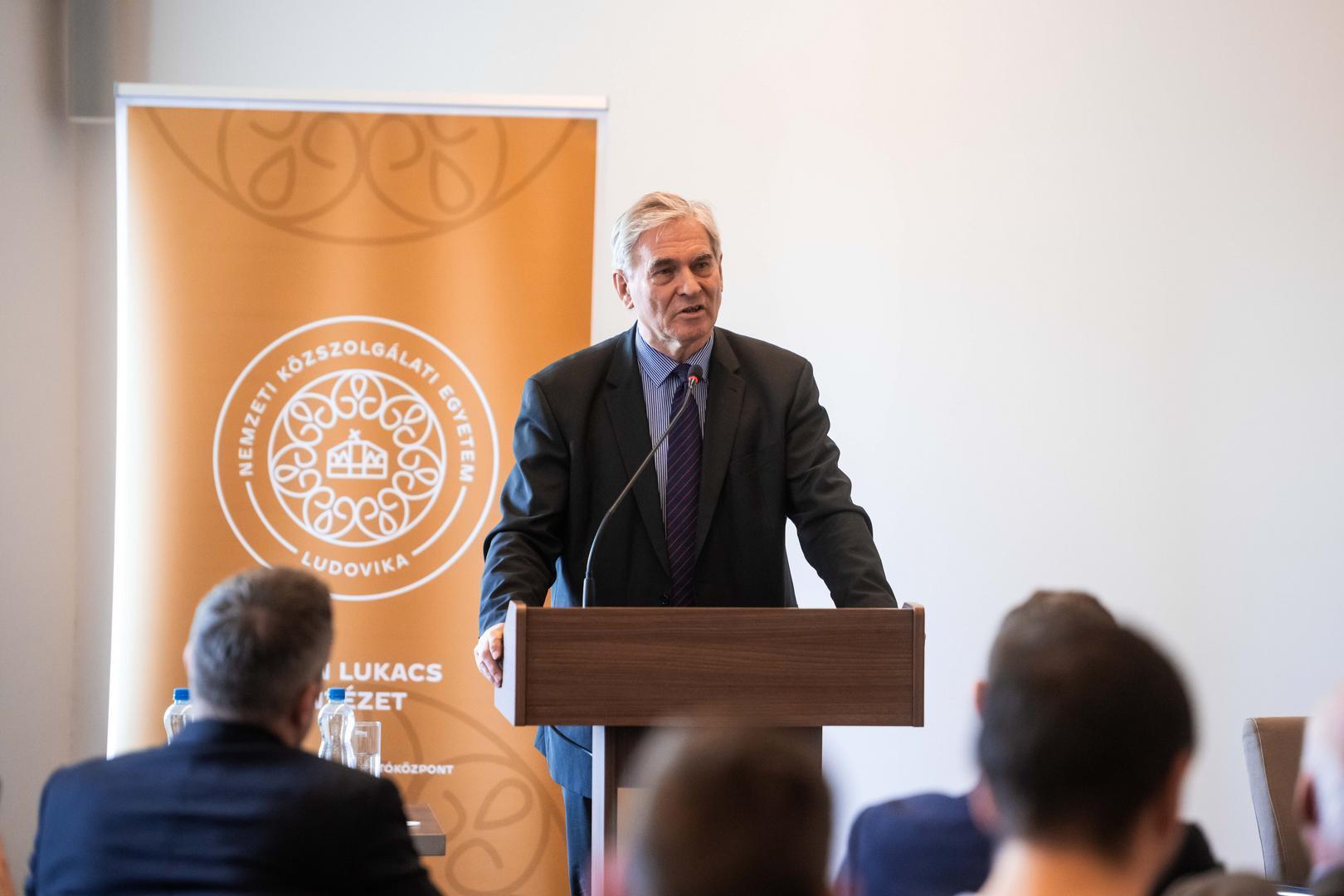
Opening the event, EJKK Director General Bernát Török emphasized that the discussion aimed to foster a deeper understanding of the United States. As he noted, the constant noise of day-to-day politics does not always help illuminate broader strategic processes. “It is better to have a document in front of us,” he said. The National Security Strategy, for example, clearly articulates what the United States stands for, its intentions, and the strategic framework through which it seeks to act. Such a document provides a strong foundation for professional debate and for assessing how strategy aligns with reality.
The Historical and Institutional Background of the Strategy
The modern form of the U.S. National Security Strategy (NSS) developed after 1976, when it became the president’s obligation to present the country’s global role, strategic priorities, and required resources to Congress and the public. This was explained in the opening lecture titled “An Overview of the U.S. National Security Strategy and Its Role in American Foreign Policy Decision-Making,” delivered by Tamás Magyarics, professor emeritus at Eötvös Loránd University.
Magyarics noted that the institutional roots of the strategy go back to the National Security Act of 1947, enacted after the Second World War. This legislation created key institutions such as the National Security Council, the Central Intelligence Agency (CIA), and the U.S. Department of Defense. The strategy exists in both public and classified versions.
To date, nineteen NSS documents have been produced, with the largest number issued during the administration of Bill Clinton. Magyarics reviewed how different administrations have approached the NSS, from Ronald Reagan’s alliance-strengthening strategy to the democracy-promotion approach emphasized by Joe Biden. He stressed that the NSS always reflects the president’s worldview and the defining geopolitical challenges of the era.
Complementary documents—such as the National Defense Strategy (NDS), the Missile Defense Review (MDR), and the Nuclear Posture Review (NPR)—further elaborate the directions of military and nuclear deterrence as well as alliance cooperation.
What Does the New NSS Mean for the World?
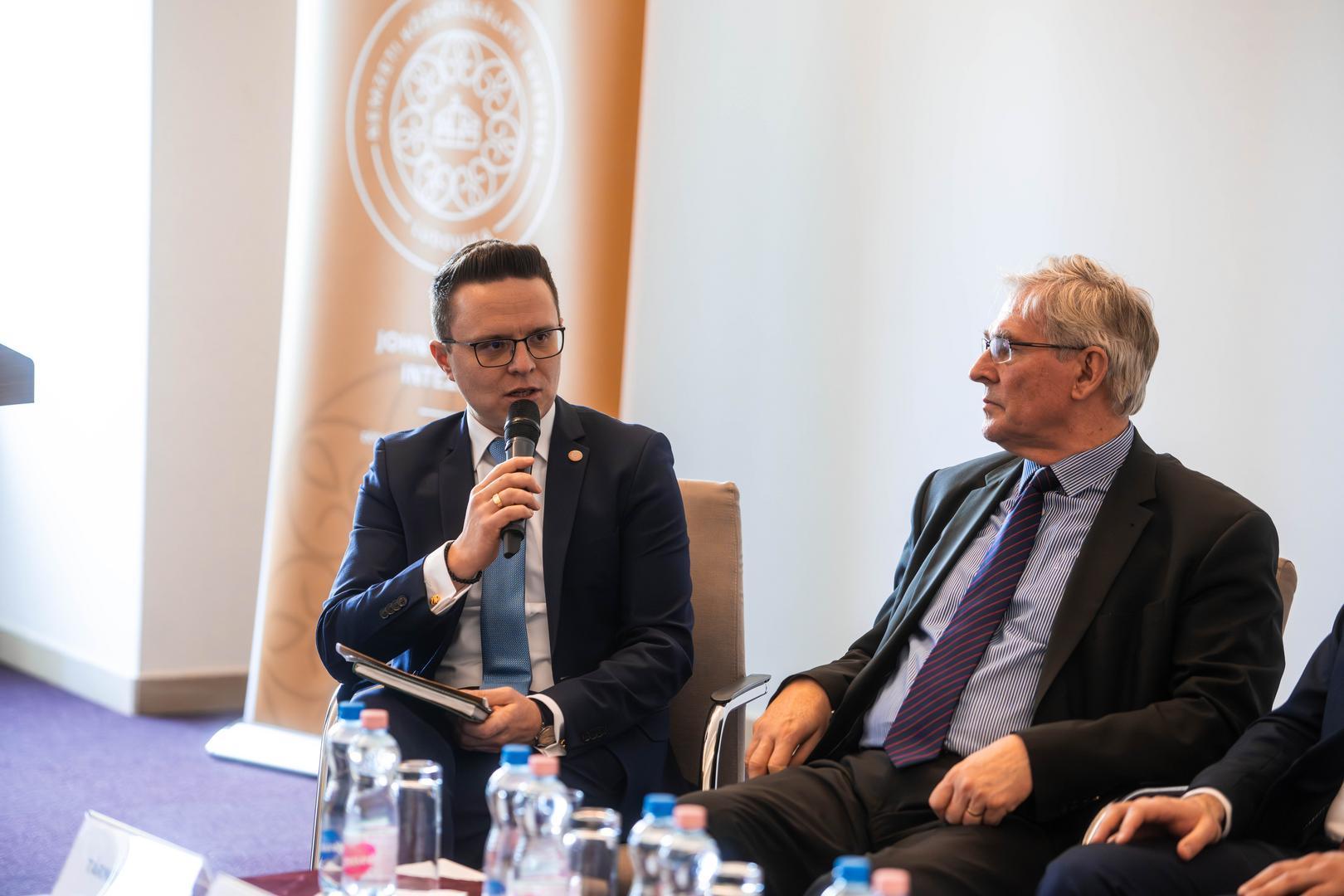
The keynote presentation was followed by a roundtable discussion titled “What Does the New U.S. National Security Strategy Mean for the World?” moderated by Balázs Tárnok, Director of Research at the John Lukacs Institute.
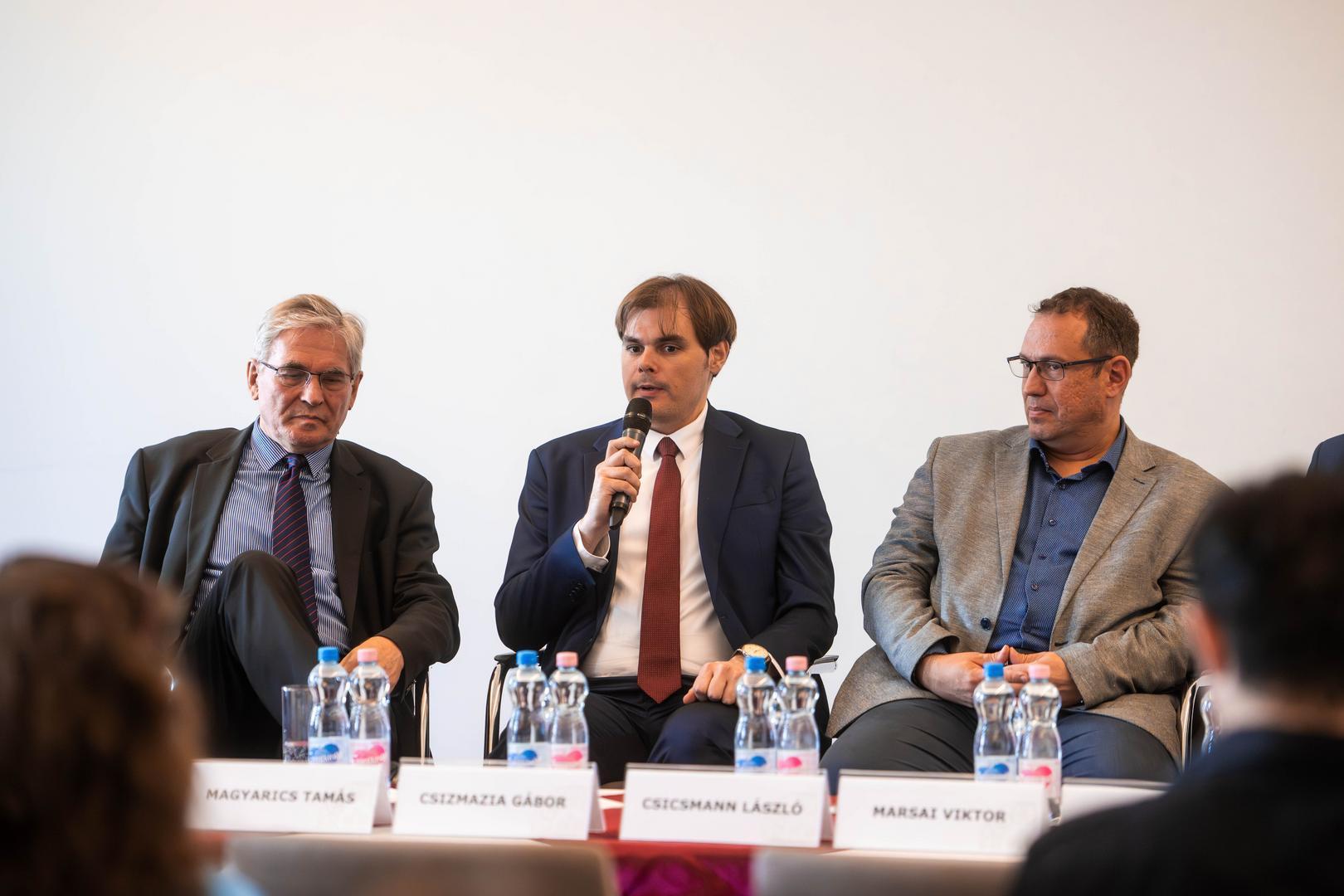
Participants included Tamás Magyarics; László Csicsmann, professor at Corvinus University of Budapest and senior research fellow at the Hungarian Institute of International Affairs (HIIA); Zsolt Reile, senior research fellow at HIIA; Viktor Marsai, associate professor at Ludovika University and director of the Migration Research Institute; Gábor Csizmazia, senior research fellow at JLI; and Viktor Eszterhai, research fellow at JLI. The participants discussed regional interpretations of the strategy.
Europe – “Civilizational Decline” and American Doubts
According to Gábor Csizmazia, the Europe chapter is one of the most critical sections of the document, describing the continent’s situation as a form of “civilizational decline.” The United States has long encouraged Europe to assume greater responsibility for its own defense—a shift that could potentially include a reduction of the American military presence.
Although Congress continues to limit the president’s ability to withdraw troops, the concept of greater European “self-reliance” remains prominent in American strategic thinking. Csizmazia also pointed out that domestic political divisions in the United States strongly influence perceptions of the war in Europe. Some Republicans oppose continued support for Ukraine, while Donald Trump simultaneously advocates for ending the conflict quickly while promoting large-scale arms sales to European states.
Middle East – An Iranian Nexus Rather Than Strategic Retreat
László Csicsmann argued that the document places China at the center of U.S. strategic thinking, meaning that the Middle East is no longer the top priority. Israel’s security is primarily framed through the expansion of the Abraham Accords, with the administration seeking to bring additional countries—such as Saudi Arabia—into the framework.
However, Iran remains a major obstacle. Beyond its regional influence, Tehran has also expanded its global connections through organizations such as the Shanghai Cooperation Organization (SCO) and BRICS.
Gaza remains a key flashpoint. At one point, Washington even sought to bring Iran to the negotiating table. According to Csicsmann, U.S. policymakers underestimated the degree to which Iranian society would rally behind the regime due to the strong martyrdom narrative embedded in political culture. Another major uncertainty is the lack of a viable alternative leadership should the regime collapse. If the current regime remains in power, it risks perpetuating cycles of conflict.
Washington’s objective is not necessarily the creation of a liberal democracy, but rather the emergence of a legitimate negotiating partner willing to accept U.S. and Israeli conditions. Gaza and counterterrorism therefore remain central issues, particularly given the presence of Iranian-supported groups such as Hamas and Hezbollah.
Economic interests are also visible in the Gulf region. Trump has repeatedly called on oil-producing states to invest their wealth in the United States. However, these countries increasingly feel they have been drawn into conflicts that are not of their making. The situation evokes memories of the U.S. withdrawal from Afghanistan, raising doubts about Washington’s reliability as an ally.
Africa – At the Bottom of the Priority List
Viktor Marsai noted that Africa appears at the very bottom of the administration’s list of priorities, which is heavily shaped by the president’s personal focus.
U.S. engagement centers on critical raw materials, counterterrorism, and targeted development partnerships. Earlier ideologically driven approaches have largely disappeared, replaced by pragmatic cooperation.
The declining level of American attention is reflected, for example, in the closure of several regional offices of Voice of America, which has created informational gaps across the continent.
Marsai also noted that prior to the presidential election many analysts believed it would be best if the president simply refrained from focusing on Africa, allowing experts to handle policy. Today, the president indeed pays little attention to the continent—but instead of relying on specialists, he appointed his son-in-law to oversee African affairs.
Peace agreements have been signed across several conflict zones, yet many wars continue at lower intensity. African actors often sign agreements and publicly celebrate them, only to resume fighting later. This dynamic undermines U.S. business engagement as well, frequently allowing China to fill the vacuum.
Latin America – The Return of the Monroe Doctrine
Zsolt Reile emphasized that the strategy assigns significant importance to the Western Hemisphere. Its primary goals include strengthening security cooperation, combating organized crime, securing critical raw materials, and reducing Chinese influence.
China now plays a major role in the region’s electrical grids, ports, and transportation infrastructure. In many cases, these projects include dual-use capacities that could also serve military purposes, presenting a strategic concern for Washington.
The question of influence over the Panama Canal is particularly sensitive. Reile suggested that the United States may also pursue a more active policy toward Cuba in the coming years.
Unlike some other regions, policy toward Latin America is not shaped by informal family influence but falls under the supervision of Marco Rubio. The issue also personally interests Donald Trump, whose political influence has contributed to the rise of conservative governments across the region. This trend may provide the United States with more predictable and cooperative partners in the hemisphere.
An Uncertain Strategic Outlook
In his concluding remarks, Tamás Magyarics warned that the strategy has already been “confronted by reality” in several respects. The outcomes and duration of both the Russia-Ukraine war and the conflicts in the Middle East will fundamentally shape the feasibility of the goals outlined in the document.
Prolonged armed conflicts also pose political risks for the American administration, particularly as the midterm elections approach.
Text (Hungarian): Tibor Sarnyai
Photo: Dénes Szilágyi
English translation: John Lukacs Institute for Strategy and Politics