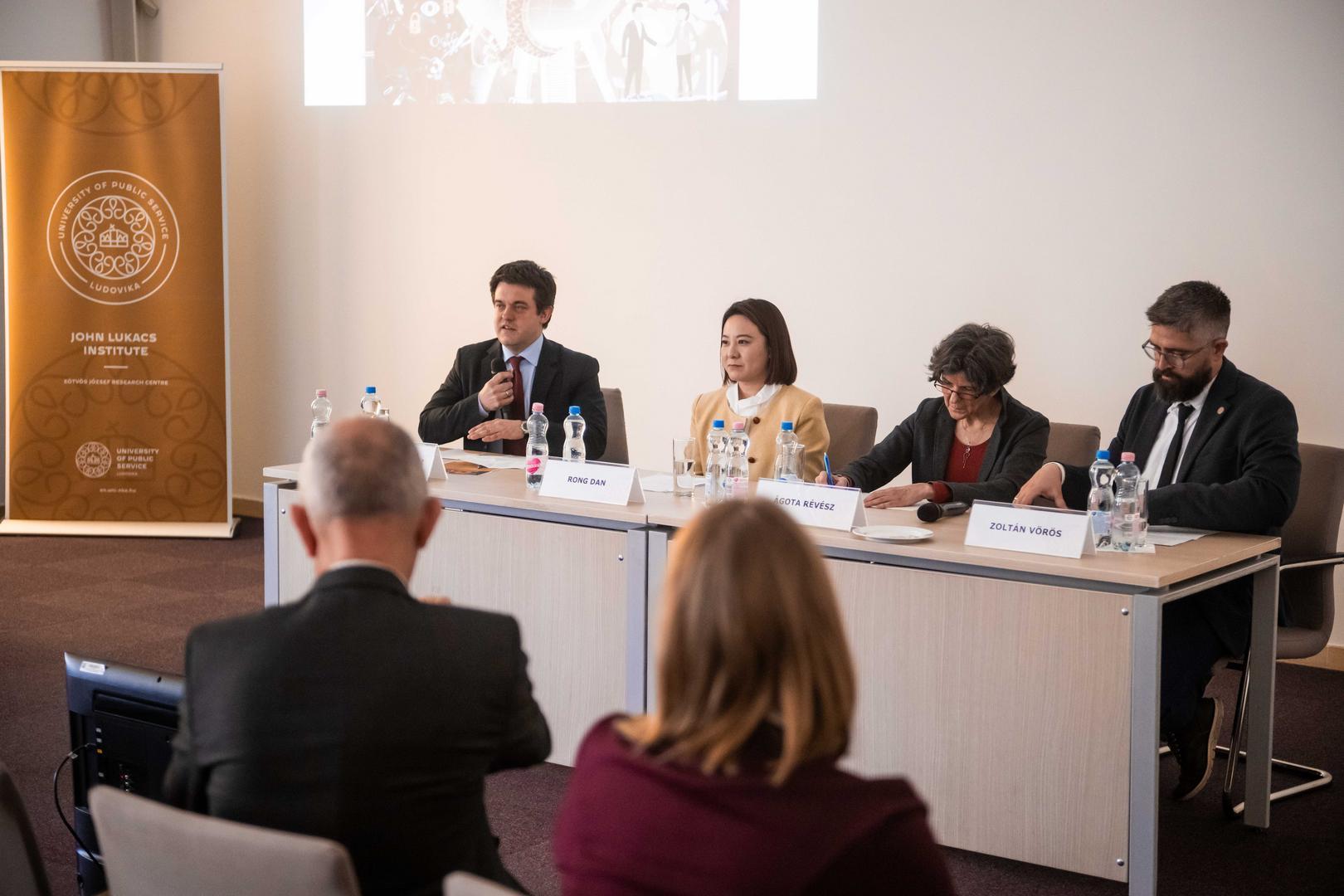

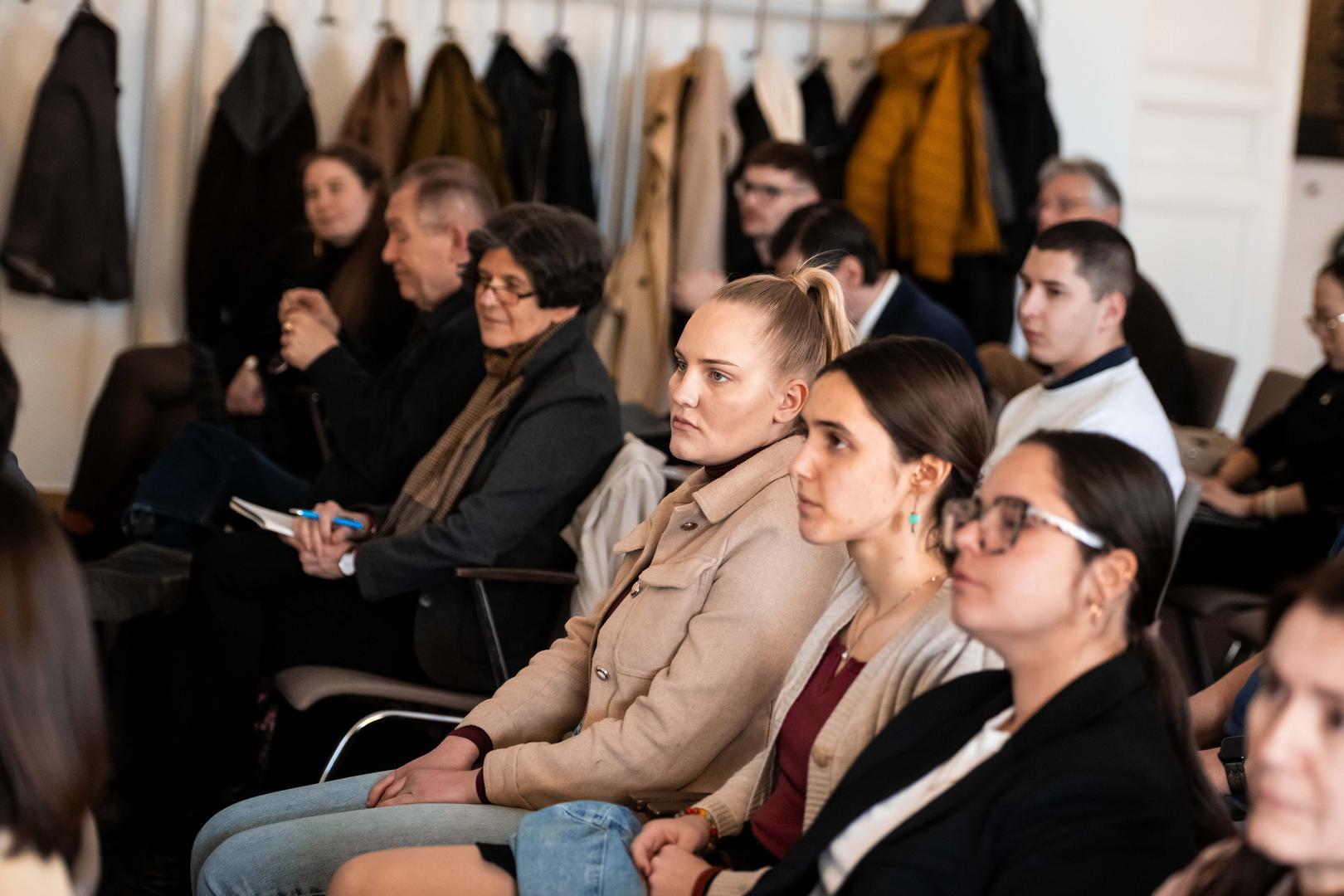
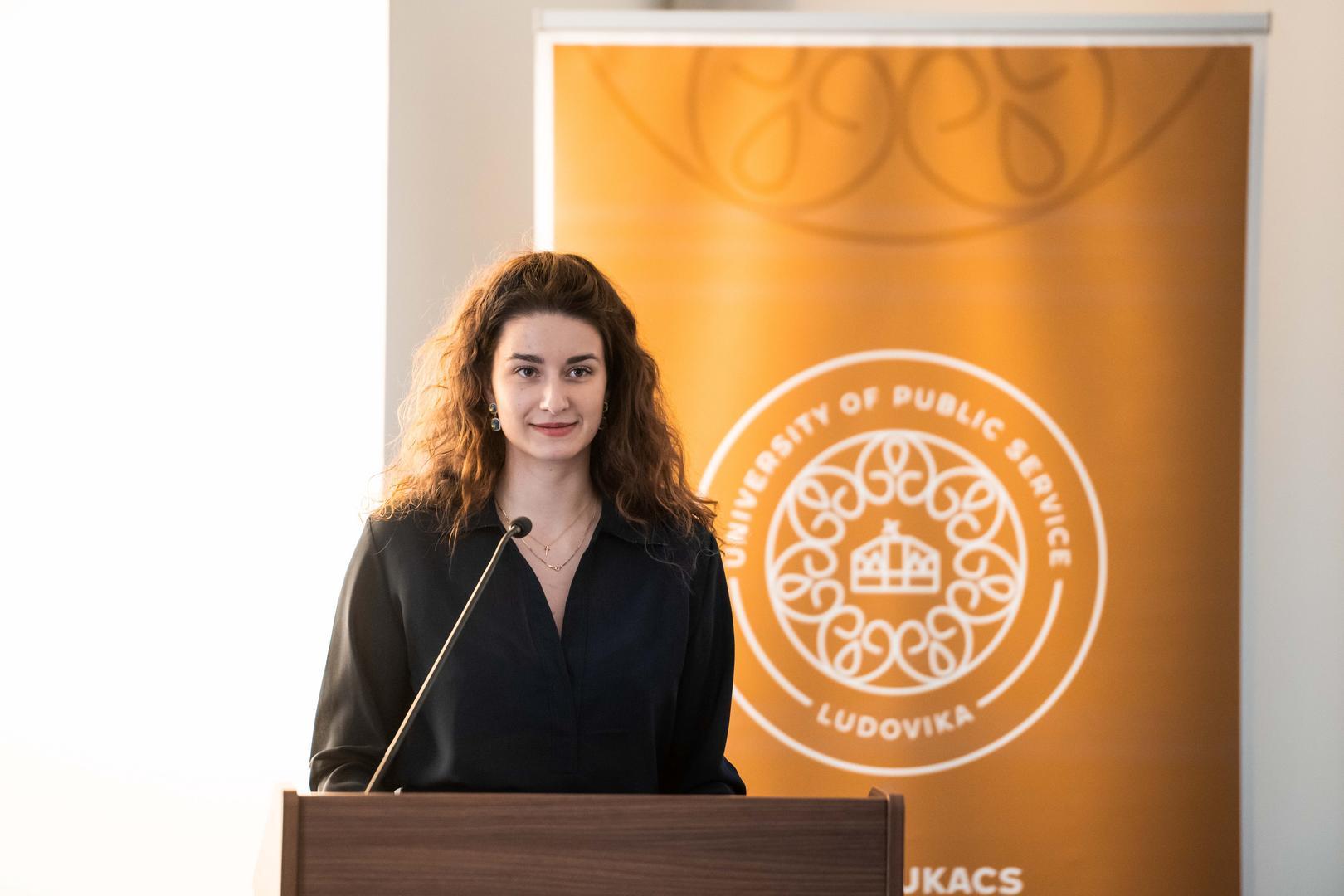
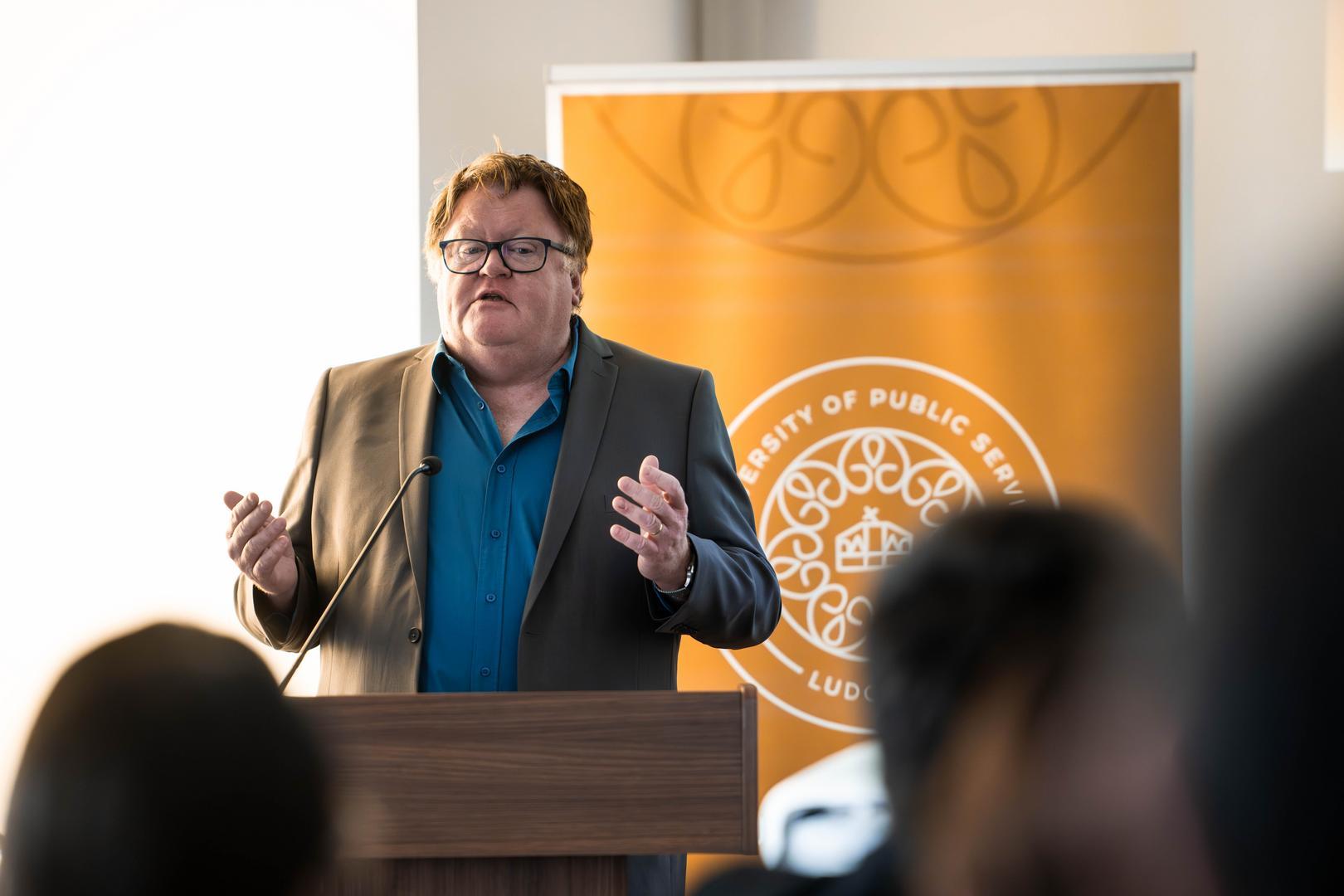
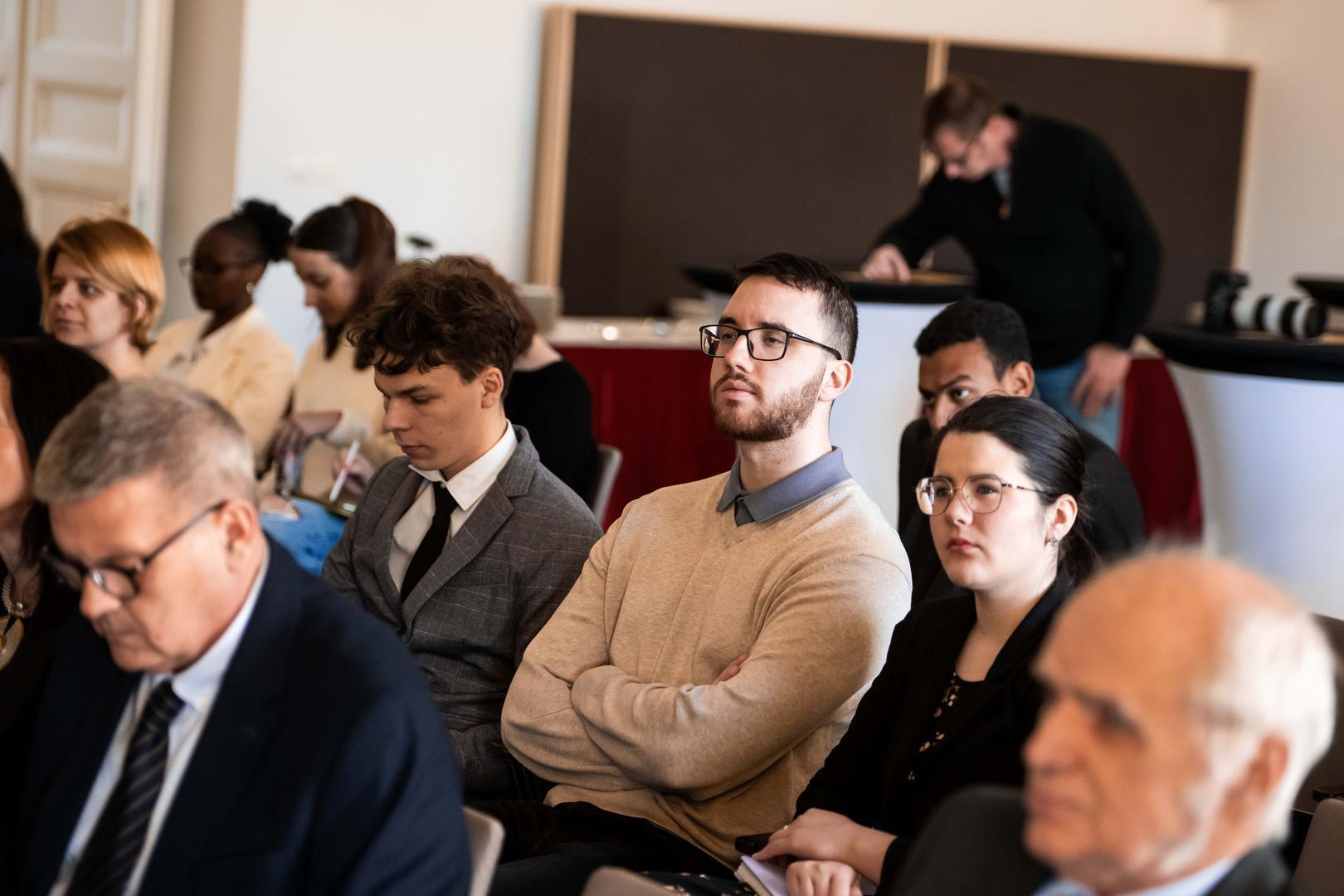
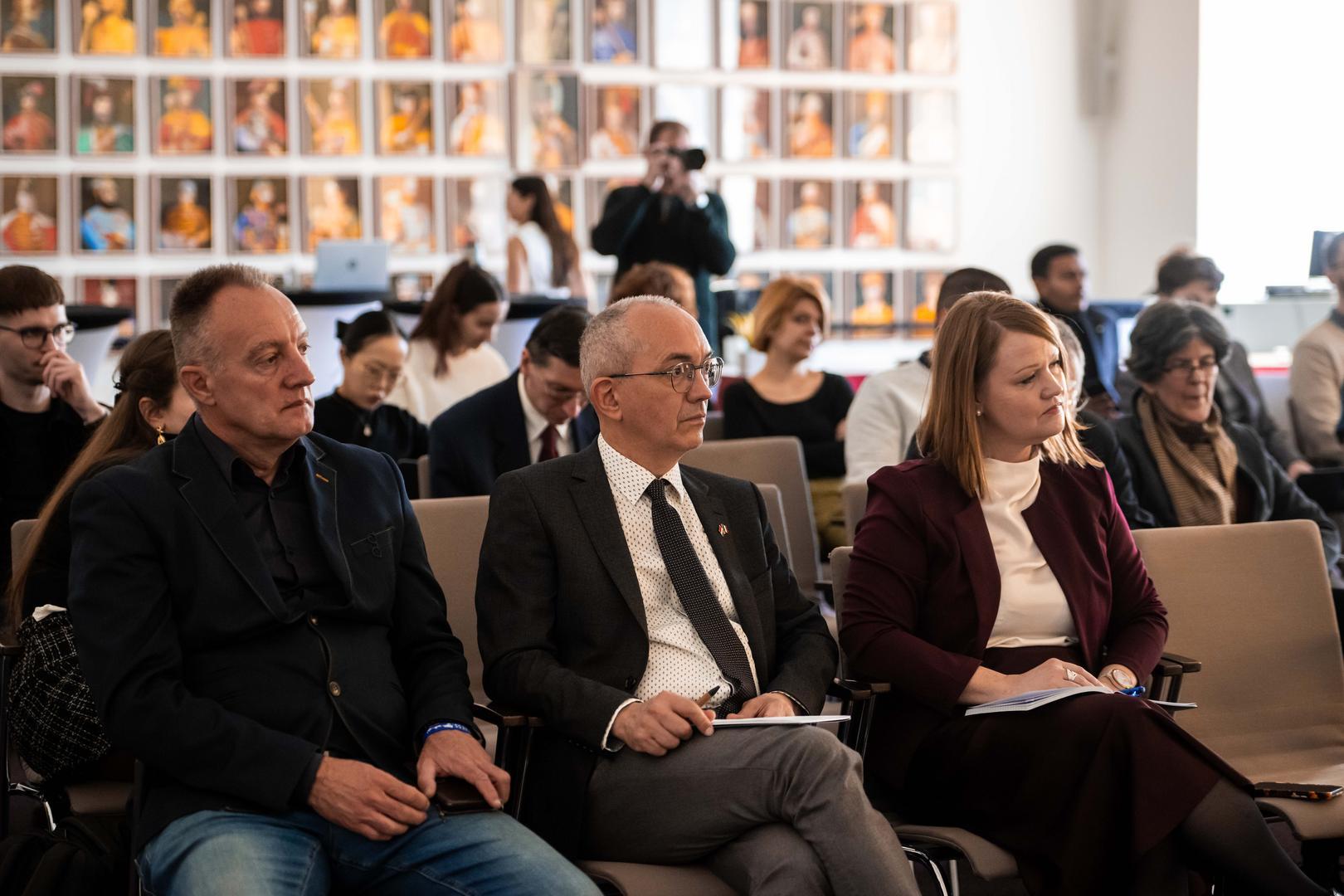
John Lukacs Institute for Strategy and Politics (JLI) at Ludovika University of Public Service (LUPS) organized an international conference titled China’s Global Image in a Changing International Order on March 18, in the Zrínyi Miklós Hall of the Ludovika Main Building. The event was opened by Liliana Śmiech, LUPS’s Director General for International Affairs at LUPS.
The Revival of China Specialists
In Europe, there has recently been an increasing need for China specialists. Shaun Breslin, professor at the University of Warwick, pointed this out in his presentation China’s Global Face – The European Perspective. He explained that he originally went to China to study Marxism. Later, his students became more interested in China due to human rights issues, and subsequently because of its growing economic power. The outbreak of the pandemic also drew attention to China. However, even in Europe, there is no unified perception of China. While in the UK, conservative advisors viewed China’s rise as a threat, Prime Minister David Cameron aimed to be China’s greatest friend in Europe. This shift occurred after Brexit but cannot be seen as a simple black-and-white change. The perception of the Asian power primarily depends on political leaders, but think tanks, politicians, and media shape the evolution of these perceptions.
Formation of Opinion Circles
Today, numerous Europe-based China-focused research centres portray China as a challenge or threat, often referencing each other. They have kept multiple narratives on the agenda, such as the situation in Xinjiang, China’s role in the Russia–Ukraine war, Hong Kong and treaty violations, and the Covid-19 pandemic. Increasingly, they examine what might happen to Europe in the future—how China could use its economic power and Europe’s dependency as leverage, for example, against the UK. Many argue that Trump changed everything, while it is certain that he introduced a different approach compared to Biden.
From the World’s Workshop to a Great Power
Europe initially viewed China as the world’s workshop. Before 2004, Chinese investments in Europe were minimal. This changed significantly, and by 2016, Chinese investments and acquisitions had exceeded €35 billion. Trade volume also grew enormously, surprising many. Questions arose as to whether such a large trading partner could always act fairly. Europe’s confidence in the long-term dominance of its economy seemed to diminish. By 2018, The Economist wrote that the assumption that China would become more democratic had failed. Many no longer believed that they could influence its domestic politics. In the early 2000s, China began its own great power initiatives worldwide, demonstrating that it aims to become a global actor, not merely a trading nation. Consequently, Europe’s initially positive, economy-focused perception shifted toward seeing China as a threat, while maintaining partnership remained necessary, alongside keeping concerns on the agenda. Some even fear that Europe may eventually have to choose sides between the competing great powers, the USA and China.
Robust Pragmatism
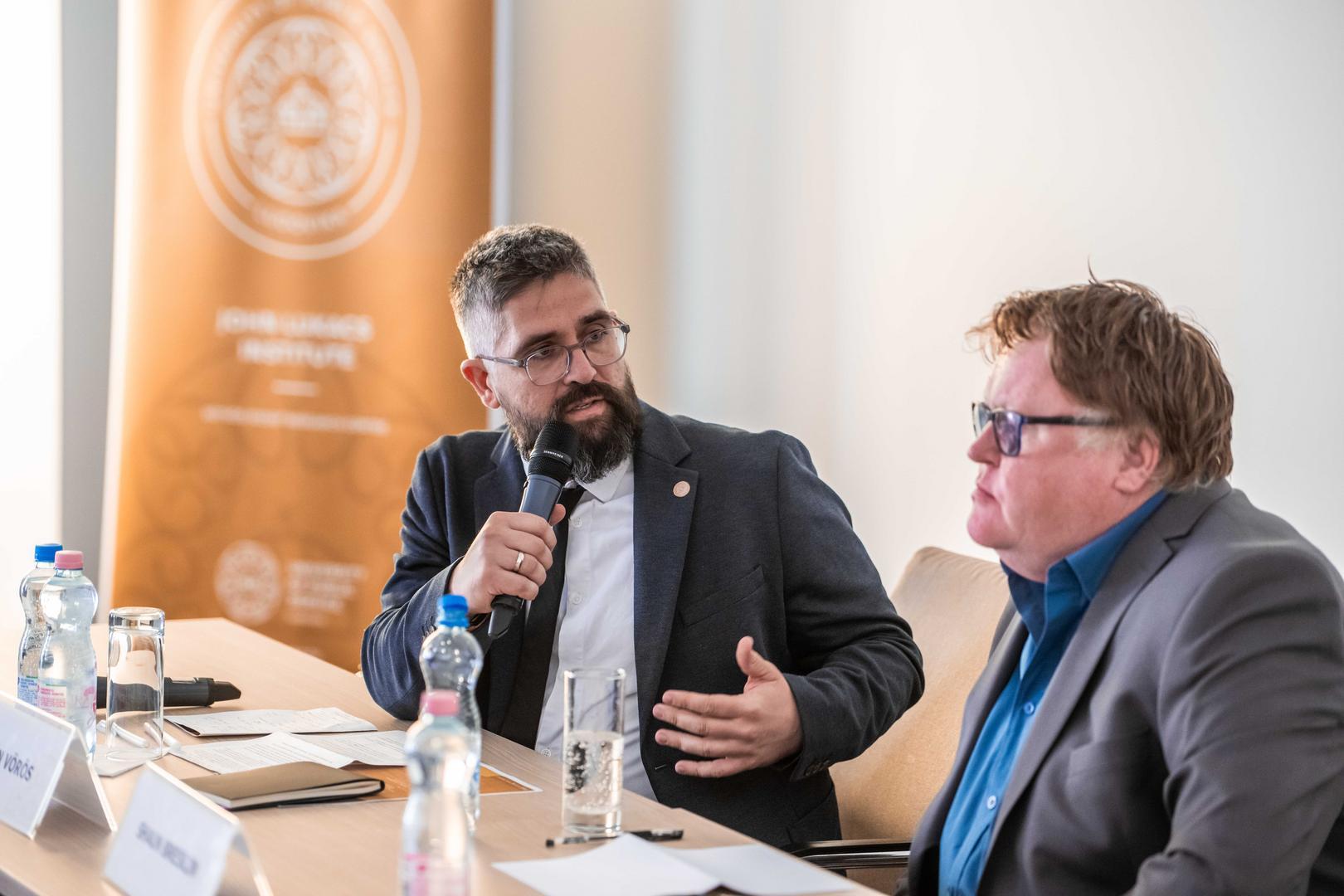
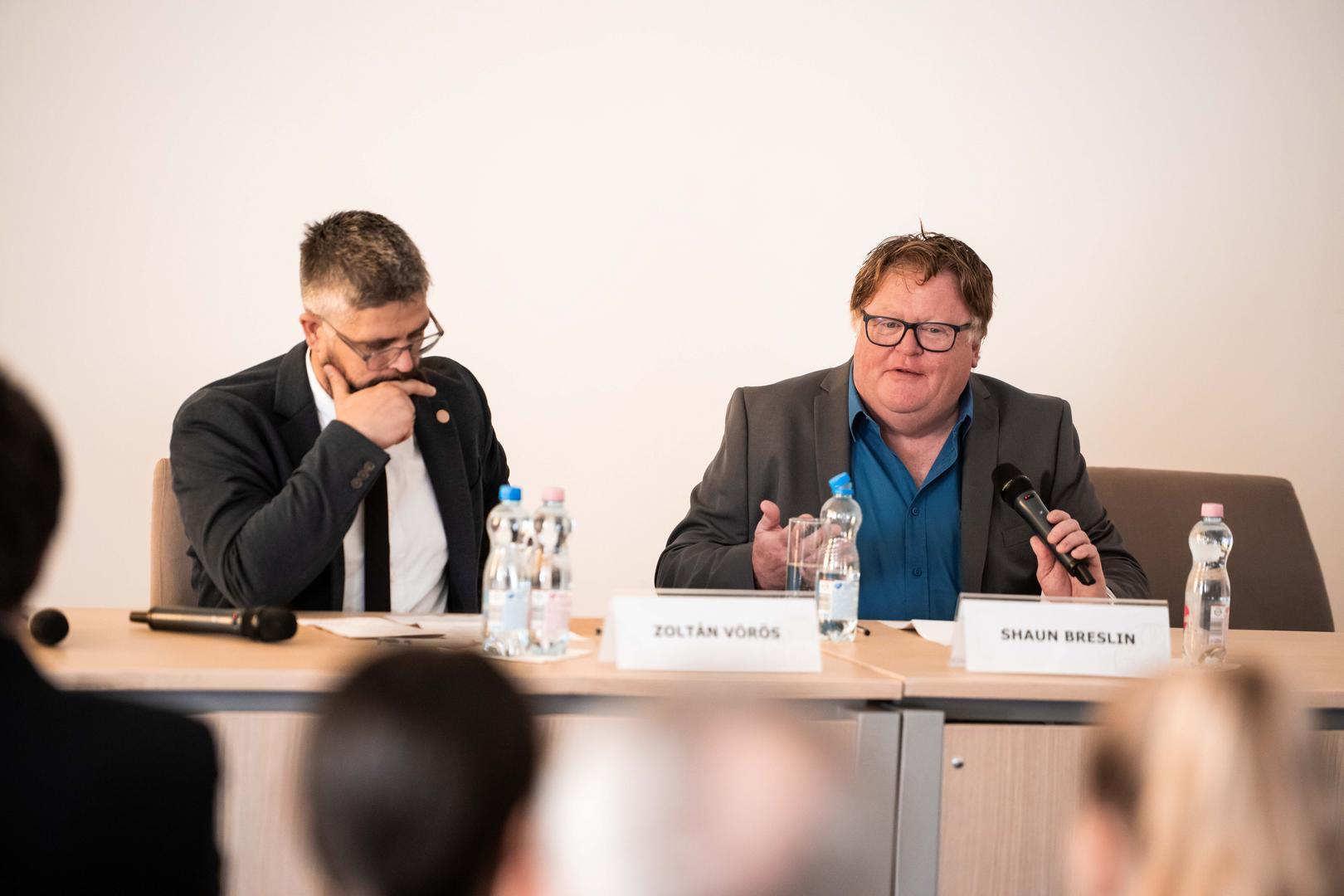
The event continued with Shaun Breslin being interviewed by Zoltán Vörös, Senior Research Fellow at JLI. In response to questions, Breslin emphasized that politics about China in the UK is now dominated by robust pragmatism. While investments can be legally restricted, it is not governments but companies and individuals who trade. Tariffs can be imposed, but this is costly, ultimately paid by voters. Politicians are quick to raise concerns but slow to propose solutions. Looking back at the Cold War, alignment with a bloc clearly meant adhering to that bloc’s position. Today, things operate differently, and Europe must recognize this. Likely, in the future, ad hoc, pragmatic coalitions will form on specific issues in world politics.
Partnership or Competition?
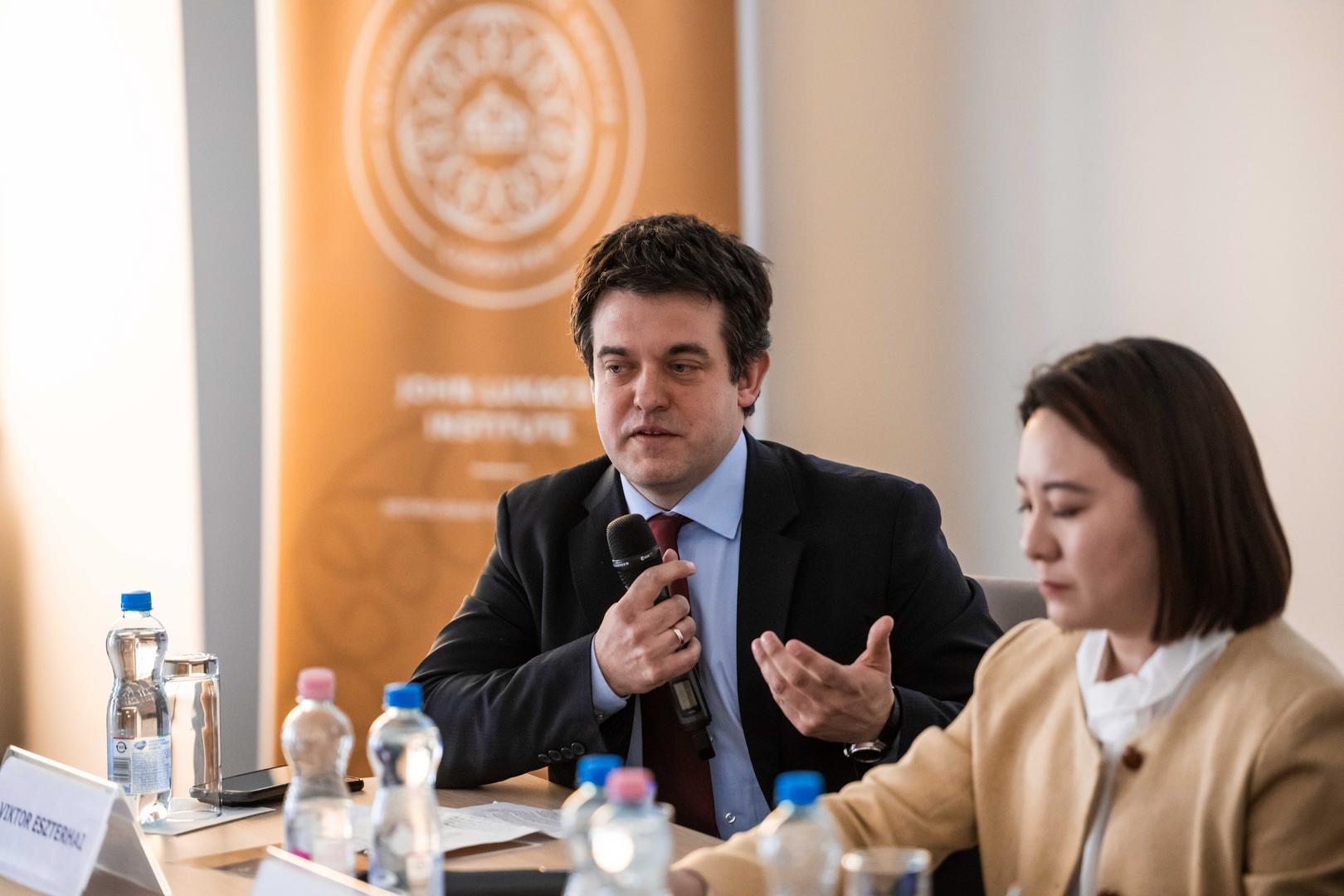
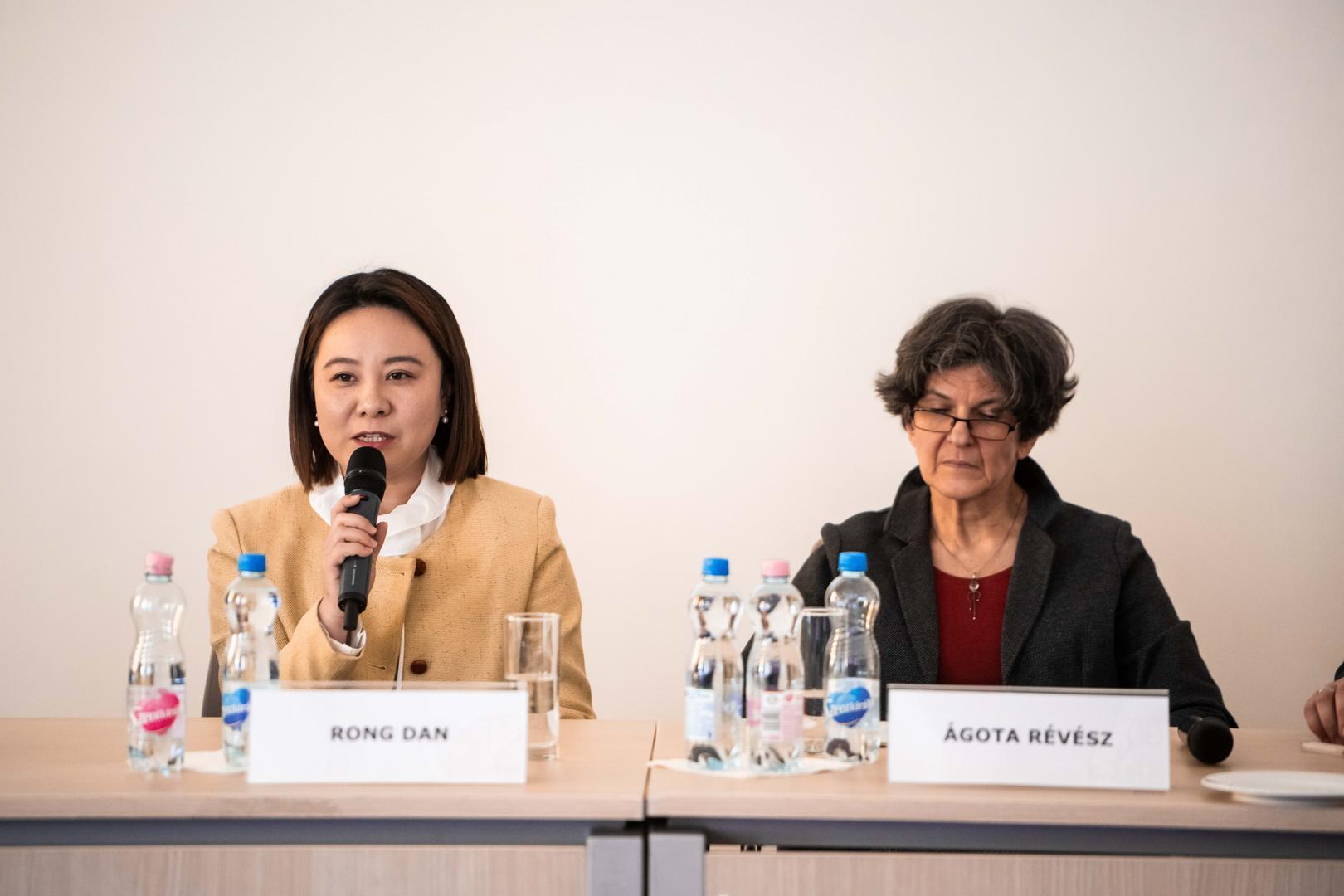
In the second part of the conference, a roundtable moderated by Viktor Eszterhai, head of the Research Programme on China and the Indopacific Region at JLI, discussed China’s Image from Global Perspectives. Participants included Rong Dan, lecturer at the International Strategy Institute of Guangdong University of Foreign Studies; Ágota Révész, associate professor at Károli Gáspár University of the Reformed Church; and Zoltán Vörös, Senior Research Fellow at JLI.
Rong Dan emphasized that China remains a developing country, while also having the potential to act as a partner for Europe in the field of development cooperation. In Africa, many view the EU-China relationship as strategic competition. However, African countries generally do not see it as a zero-sum game; most aim to build partnerships with both sides, as they complement each other in different areas. China excels in infrastructure development and rapid decision-making. Europe has traditionally been a key actor in Africa, whose value partners measure in human rights, good governance, and quality of life. Communication between China and the EU regarding specific development projects has continued, even during geopolitical tensions. Rong Dan argued that China should not be viewed in black-and-white terms or on a good-vs-evil axis. Today, China is willing to accept responsibility as a rising global power, committed to international development and supporting other countries’ economic growth. At the same time, China still faces challenges in international communication compared to the Anglo-Saxon West, and it is still developing its approach to self-promotion in a global context. This is an area where improvement is needed, but China is actively learning and adapting.
The Democratic Opinion Bubble
Ágota Révész noted that China’s perception in Europe is heavily influenced by politicians and media. Germany has taken a largely China-critical stance, while Hungary maintains a China-friendly approach. In Germany, officials are often unwilling to engage with China, limiting firsthand knowledge. Researchers are also constrained, preventing new narratives about China from emerging, even as the country itself continues to change. Anti-China sentiment is partly fueled by NATO and, earlier, the US. Pro-democracy opinion leaders still exert significant influence across the EU.
Hungary has long-standing ties with China, and the Chinese view Hungarians positively (previously they had a similar opinion of Germans). While Hungary’s current Chinese economic relationships are criticized in Europe, China exists and must be engaged. The West represents only one-eighth of the world’s population. So far, China has largely accepted the Western perception of itself, but it is likely capable of creating new narratives.
On the Path to Global Superpower Status
Zoltán Vörös explained that in Africa, foreigners are often identified as Chinese rather than French nowadays. Few African elites speak about China, and those opinions tend to be positive. Africa plays a crucial role in China’s image as a global power. China acts pragmatically, learning from its own and European past mistakes, capable of improving existing solutions, and willing to engage in dialogue. The Chinese can deliver high-quality results if local clients demand it, sometimes serving as role models for African countries. Africans tend to view China as an opportunity rather than a threat, seeking a balance between the West and China. Accordingly, they increasingly express their own interests, to the extent that China may not always be the executor of projects. China must also contend with the fact that asserting its interests strongly will create adversaries, just as the US experiences. Therefore, it must
Text (Hungarian): Tibor Sarnyai
Photo: Dénes Szilágyi
English translation: John Lukacs Institute for Strategy and Politics